

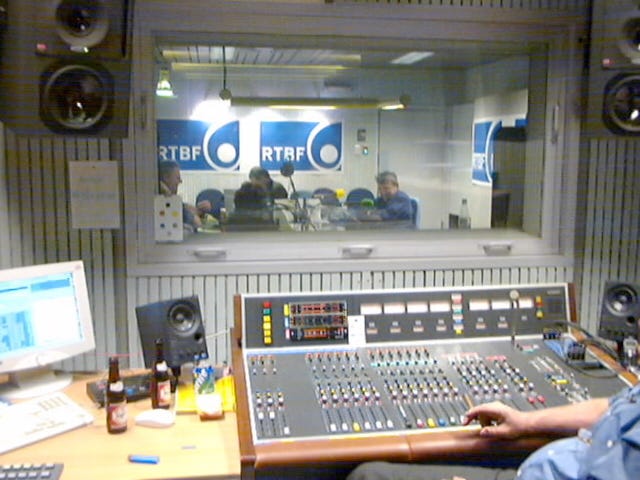
Belgium is seldom associated with democratic backsliding, yet recent developments show how media authoritarianism can advance without spectacle. At the centre of the current controversy stands the RTBF, Belgium’s French-language public broadcaster responsible for radio, television, and digital news.
The pressure on the RTBF is being driven by the Mouvement Réformateur (MR). Under the guise of budgetary discipline and market fairness, the party has questioned the broadcaster’s cost structure, legitimacy, and even its editorial orientation. These moves are presented as neutral governance reforms, but their cumulative effect is political: they redefine the conditions under which independent journalism is allowed to operate.
This is how contemporary authoritarianism works. It does not ban reporting or close newsrooms. Instead, it delegitimises public media, restricts their financial room for manoeuvre, and frames editorial independence as a problem in need of correction. Freedom is not abolished; it becomes conditional.
Belgium’s situation fits a broader international pattern. In Italy, the RAI has increasingly come to reflect the priorities of those in power. In Hungary and Slovakia, public broadcasters have been structurally reshaped to serve governing majorities. Even the BBC, long considered a global benchmark, has been weakened by political attacks exploiting moments of internal crisis.
Across these cases, the method is strikingly similar. First comes the narrative of bias or inefficiency. Then financial pressure follows. Finally, editorial culture itself is politicised. No explicit censorship is required; journalists learn to anticipate consequences and adjust accordingly.
Belgium matters precisely because the process appears orderly and legal. There are no emergency laws, no dramatic purges. Yet the outcome can be the same: a public broadcaster that still exists, but speaks more softly, avoids controversy, and gradually relinquishes its democratic function. That is the true danger of quiet authoritarianis: not that the media disappear, but that they survive only by staying harmless.