

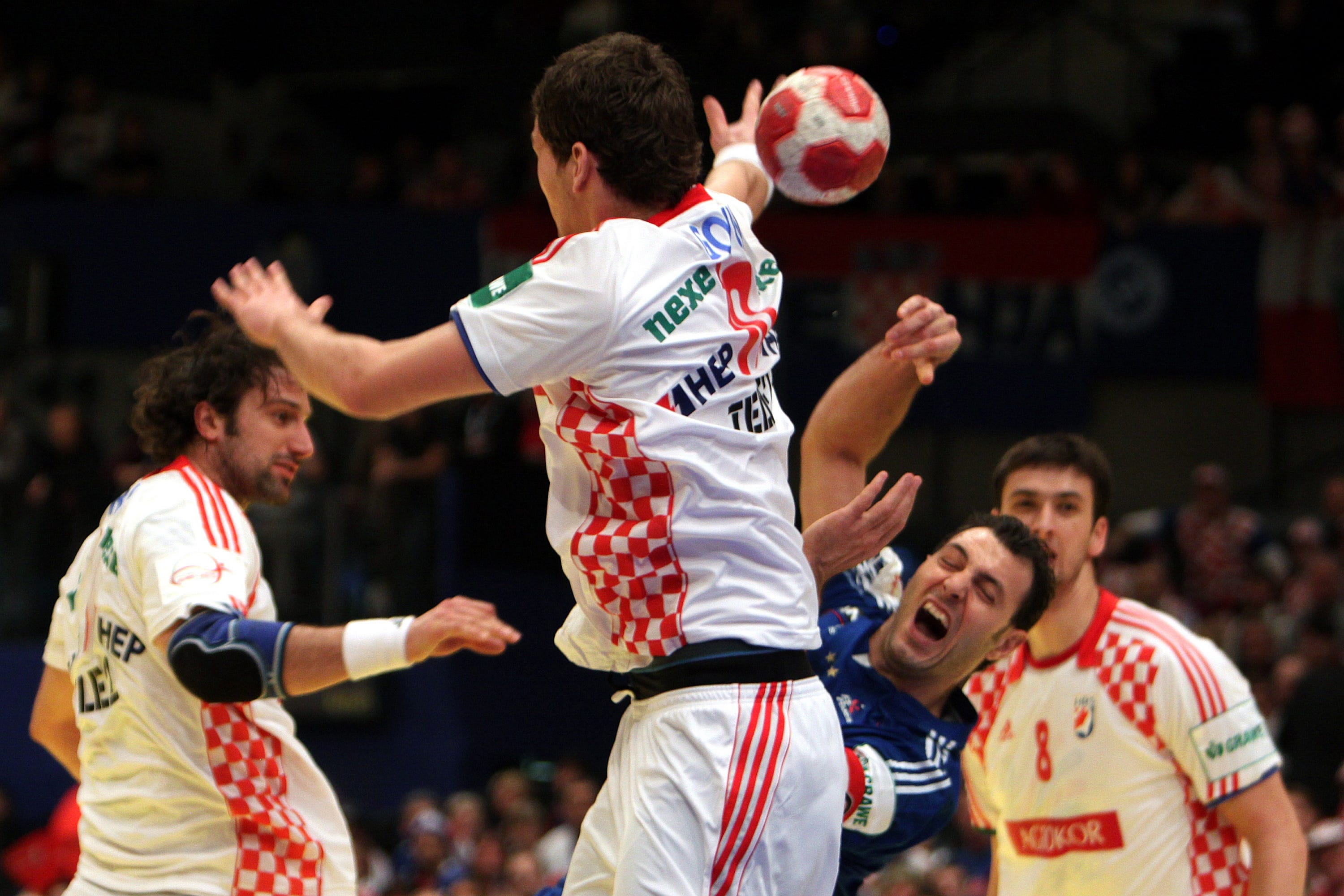
What should have been a rare, unifying moment of sporting pride instead turned into a bitter struggle over history, power and identity. The celebratory reception for Croatia’s national handball team in Zagreb, following their bronze medal at the European Championship, was eclipsed by the appearance of the controversial singer Marko Perković Thompson. Once again, sport became an unwilling stage for an unresolved political past.
Tens of thousands of supporters gathered on Monday evening at Ban Josip Jelačić Square in Zagreb to welcome the team home. The city authorities had initially begun organising the event themselves but withdrew when it became clear that Thompson would be part of the programme. For years, the singer has been associated with Croatian ultra-nationalism. His music and public performances frequently invoke the slogan “Za dom spremni” (“For the Homeland – Ready”), inseparable from the Ustaša movement and the fascist state allied with Nazi Germany during World War II.
The dispute escalated after the Croatian Handball Federation cancelled the city-led reception following the municipal veto. The national government then stepped in, organising a welcome celebration together with the federation, directly against the wishes of the city. Zagreb mayor Tomislav Tomašević described the move as an attack on the constitutional right to local self-government, arguing that the capital had been reduced to a backdrop for a political agenda it had explicitly rejected.
On the square itself, the mood was anything but restrained. Led by coach Dagur Sigurdsson, the players emerged to thunderous applause. When captain Ivan Martinović lifted the bronze trophy, the crowd erupted. Within this charged atmosphere, Thompson took to the stage, hailing the players as “Croatian knights” and performing songs popular with parts of the team. Tournament footage played on giant screens, visually fusing sporting success with nationalist symbolism.
Not everyone joined the celebration. Left-wing and anti-fascist groups unfurled banners across the square, accusing the government of normalising historical revisionism and rehabilitating authoritarian and exclusionary symbols. Among the crowd, scarves bearing the Za dom spremni slogan and flags linked to the HOS paramilitary formation, active in the early 1990s and openly inspired by Ustaša heritage, were visible.
The controversy quickly spilled beyond Croatia’s borders. Serbia’s Foreign Ministry said it was monitoring with “serious concern” the growing visibility of symbols and messages associated with World War II-era ideologies. Pro-government Serbian media seized on the incident, folding it into a familiar narrative of Croatian revisionism and regional threat, transforming a sporting celebration into a geopolitical provocation.
Croatia’s government rejected that interpretation outright. Prime Minister Andrej Plenković dismissed accusations of illegality, insisting that the bronze medal constituted an exceptional sporting achievement deserving of a national reception. President Zoran Milanović, however, broke ranks, calling the government’s intervention unconstitutional and legally unfounded.
What remains is a recognisable Balkan pattern. Sporting triumphs become fuel for nationalist self-assertion, while media ecosystems on both sides of the border reactivate old antagonisms and hardened identities. Croatian and Serbian nationalisms mirror and reinforce one another, thriving precisely in moments when symbolism overwhelms context.
The handball players emerged as national heroes, but their achievement is now inseparable from a conflict that has little to do with sport. The Zagreb reception shows how thin the line remains between celebration and glorification, between remembrance and revision. The bronze may shine on stage but it casts a long, troubling shadow over a region still struggling to leave its past behind.
Source:
Belgrade also spoke out after welcoming the Zagreb handball team | BALK Magazine
Small country, big circus: celebrating Croatian handball players 2.0 | BALK Magazine