

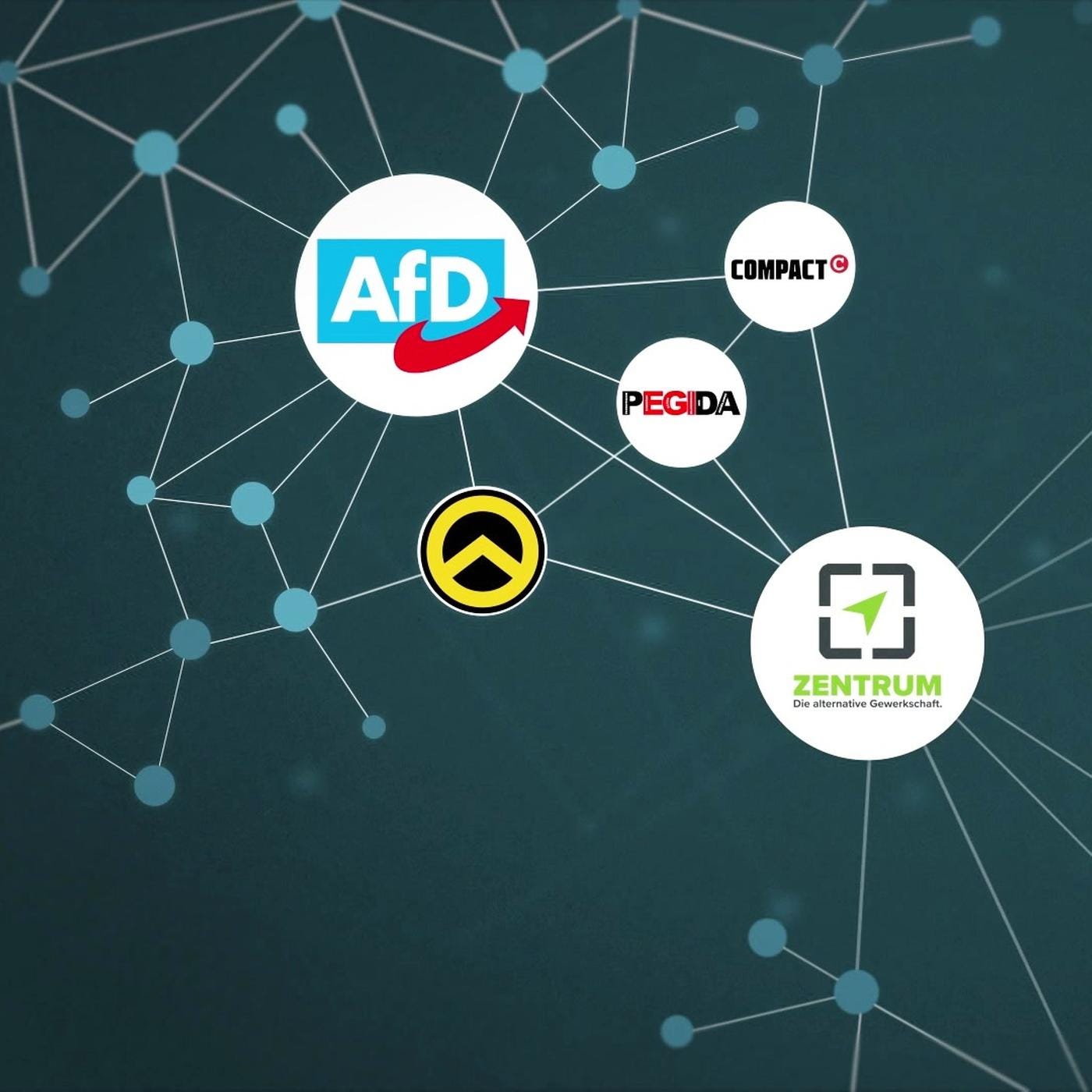
In the run-up to works council elections in Germany’s automotive industry, far-right actors are seeking to expand their influence among dissatisfied workers. The backdrop is a sector under sustained pressure: jobs are at risk due to the transition to electric vehicles, intensifying global competition (particularly from China) and ongoing restructuring at major manufacturers.
According to reporting by Reuters, activists linked to the Alternative für Deutschland (AfD) have been targeting employees at major plants such as Mercedes-Benz in Stuttgart-Untertürkheim and Volkswagen in Zwickau. They have distributed leaflets at factory gates and presented themselves as an alternative to established trade unions.
What Is Zentrum?
The organization playing a central role in this effort is Zentrum Automobil, commonly referred to as Zentrum. Founded in 2009, Zentrum presents itself as an independent trade union for workers in the automotive industry. In practice, however, it is widely regarded as closely aligned with circles around the AfD.
Zentrum participates in works council elections within German companies. Unlike established unions such as IG Metall, which are deeply embedded in Germany’s system of co-determination, Zentrum positions itself as an opposition force against what it calls “monopoly unions.” It argues that mainstream unions are too closely aligned with corporate management and political elites and have failed to adequately defend job security.
Critics, including IG Metall and several political figures, view Zentrum as an attempt by the far right to gain institutional legitimacy through workplace democratic structures. They warn that increasing political polarization on the shop floor could undermine Germany’s model of social partnership.
Works Councils as a Strategic Target
In Germany, works councils (Betriebsräte) play a significant role in mediating between employees and management. They have co-determination rights on issues such as personnel policy, working conditions, and restructuring measures. Elections for these councils are held periodically within companies.
For networks linked to the AfD, these elections represent a strategic entry point into a domain historically dominated by social-democratic and Christian-democratic labor traditions. By securing representation in works councils, they can influence internal decision-making while simultaneously building visibility among industrial workers, an electorate that has shown growing receptiveness to right-wing populist messaging in parts of the country.
Political and Corporate Responses
Automakers have responded cautiously, emphasizing their commitment to pluralism and democratic procedures within the workplace. Trade unions have described the development as concerning but note that Zentrum has so far achieved only limited electoral success.
The upcoming works council elections will determine whether far-right actors can establish a durable foothold within the core of Germany’s industrial economy or whether traditional union structures will maintain their dominance.
Source: